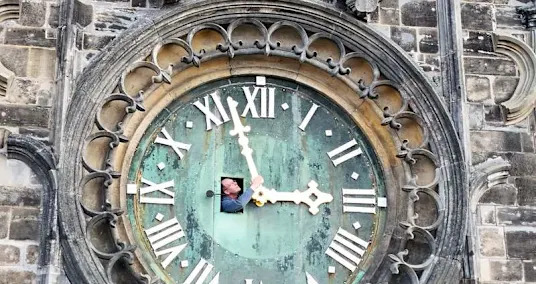
Clocks across the majority of European countries are set to go forward by one hour early on Sunday as the continent moves to daylight saving time, also known as summer time.
Clocks in most European nations including Germany advance by one hour at 2 am (0100 GMT) to 3 am, heralding longer evenings and brighter days.
This means that for the coming months parts of Europe will be on Central European Summer Time (CEST), before moving back to Central European Time (CET) in the autumn, when clocks go back again by an hour on October 25.
The aim of the change is to make better use of daylight in the shorter days of the winter in the northern hemisphere.
The signal for the automatic changeover of the clocks in Germany comes from the Federal Institute of Physics and Metrology (PTB) in the northern city of Braunschweig, also known as Brunswick in English.
The institute's experts ensure that radio-controlled clocks, station clocks and many industrial clocks are supplied with the signal via a long-wave transmitter called DCF77 in Mainflingen near Frankfurt.
latest_posts
- 1
 Congo declares its latest Ebola outbreak over, after 43 deaths
 - 2A mom stopped giving her kids snacks — and sparked a debate about eating habits
- 3Wisconsin archaeologists identify 16 ancient canoes in a prehistoric lake 'parking lot'
- 4Crypto Investor’s Family Tied Up and Beaten by Armed Gangs in Their Home
- 5Modern surgery began with saws and iron hands – how amputation transformed the body in the Renaissance


- Birutė Galdikas: The last of the ‘angels’ in primatology’s most extraordinary chapter
- Exploring the Difficulties of Beginning a Family: Individual Experiences
- RFK Jr.'s diet guidelines emphasize red meat, full-fat dairy. How healthy are they?
- Sound and Delightful: 12 Nutritious Smoothie Recipes
- SpaceX's 1st 'Version 3' Super Heavy Starship booster buckles under pressure during initial tests
- Picking Your Next SUV: 4 Brands Offering Execution, Solace, and Wellbeing
- Experience Is standing by: 10 Pleasant Setting up camp Areas to
- Best bar-b-que Style: Which One Is Your Number one?
- Where America’s CO2 emissions come from – what you need to know, in charts